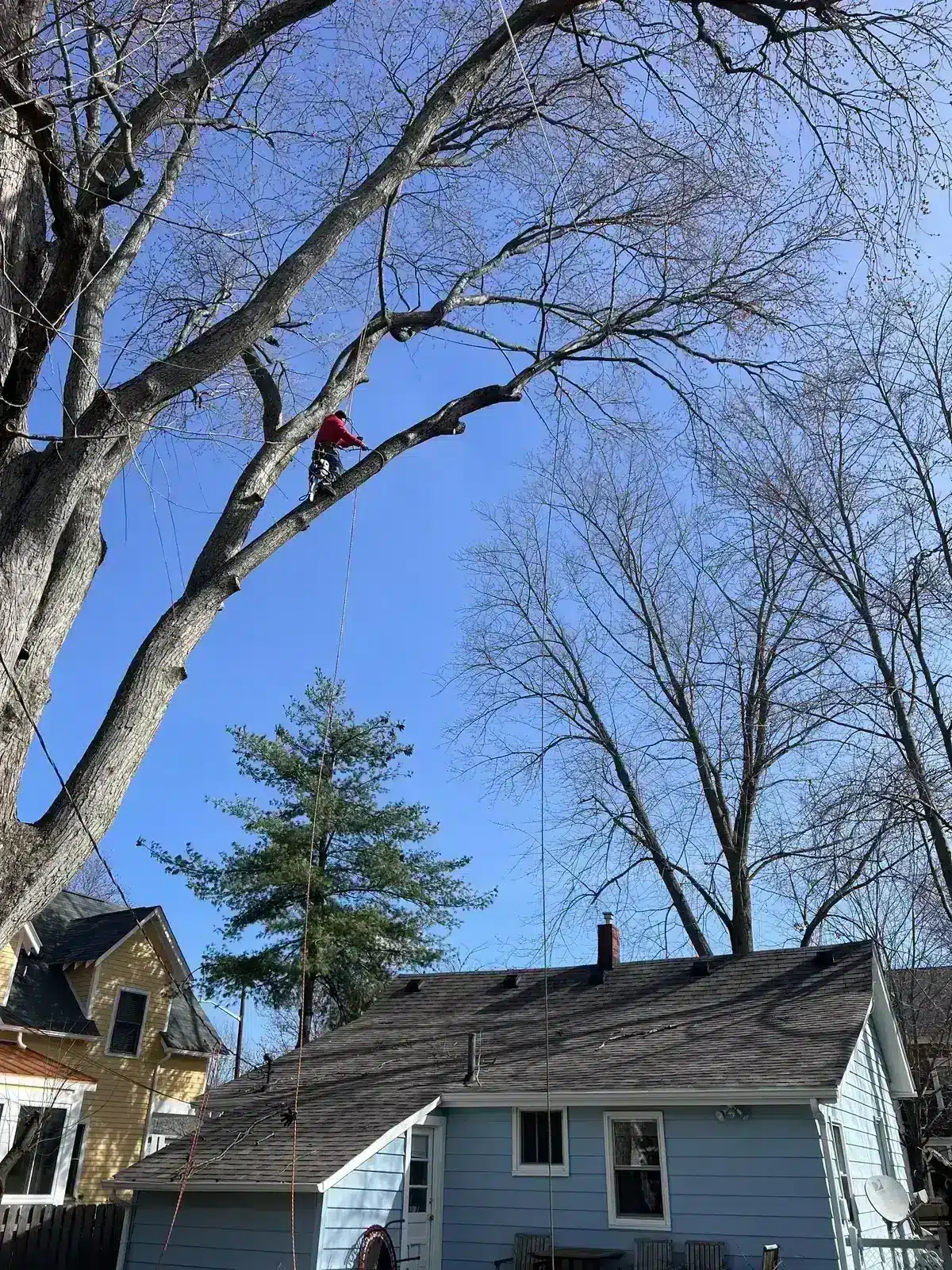
Same tools, different goals. Knowing which one your tree needs saves money and keeps it healthy.
Homeowners call and ask for trimming when they mean pruning, and pruning when they mean trimming, and honestly it does not matter much on the phone. It matters in the yard, because the two jobs have different goals, different timing, and different price tags. Here is how we think about tree trimming vs. pruning in Carmel and the surrounding towns.
Trimming Is About Safety and Clearance
Trimming is what big trees need. It means removing deadwood before the wind does, raising the canopy so you can walk and mow underneath, and cutting limbs back from the roof, gutters, siding, and driveway. It also means thinning a dense canopy so wind moves through it instead of pushing on it like a sail. When a customer says a tree is ‘too big’ or ‘too close to the house,’ trimming is usually the answer, not removal.
Pruning Is About Health and Shape
Pruning is the finer work on smaller trees, ornamentals, and fruit trees. The cuts are selective: crossing branches, water sprouts, weak crotches, and anything growing in the wrong direction. The goal is a stronger structure and, on fruit trees, better production. Good pruning is invisible when it is done. Bad pruning is the lollipop-shaped crabapple you can spot from the road.
The Mistake We See Most: Over-Pruning
Taking too much off at once is the most common way to hurt a tree. Removing more than a quarter of the live canopy in one season stresses the tree, invites disease and pests, and often triggers a flush of weak, fast growth that makes the problem worse the following year. If a tree needs a lot of work, we do it in stages. A crew that offers to ‘really open it up’ in one visit is not doing you a favor.
When to Trim and Prune in Central Indiana
- Late winter, February into March: the best window for most trees. They are dormant, the structure is visible without leaves, and they heal quickly when spring growth starts.
- Oaks: dormant season only, to avoid spreading oak wilt.
- Spring-flowering trees like redbud and dogwood: right after they bloom, or you lose next year’s flowers.
- Fruit trees: late winter for structure, light touch-ups in summer.
- Deadwood and hazardous limbs: any time. Do not wait for the calendar on a limb that is hanging over the driveway.
What About Storm Damage?
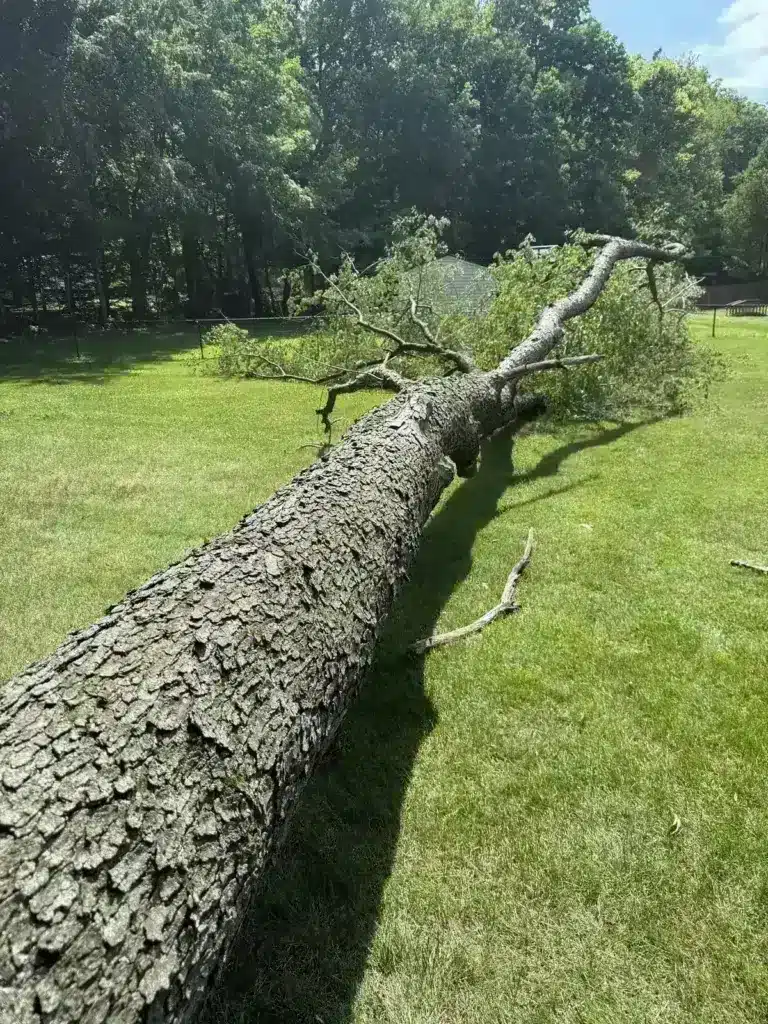
A tree that has lost a major limb in a storm often needs corrective trimming to rebalance the canopy and clean up the tear so it can seal. That is not a wait-for-February job. If a limb is hanging or resting on the roof, start with our emergency tree service; the trimming to help the tree recover comes after.
Trimming, Pruning, or Removal?
Sometimes the honest answer is that trimming will not save it. A hollow trunk, a split at the main crotch, large areas of dead bark, or a tree that has been topped repeatedly are all signs that removal is the safer call. We will tell you which one you are looking at, and we would much rather trim a tree that can be saved than take one down that did not need to go.
- #seasons
- #tree pruning
- #tree trimming